Prefabrication in Building Construction: New Normal or Trend?
Challenges and Drivers
To understand why prefabrication is no longer an option but a requirement, look no further than the bottom line. Many GCs tell us they’re facing headwinds because their hourly costs are escalating significantly, driven by a shortage of labor. As a result, it’s not cost-effective to construct buildings the way we’ve been doing it for decades. Everyone wants to see projects completed faster, but throwing more labor at the problem drives costs too high — if you can find enough workers to begin with. The same challenges we hear about from GCs are trickling down to owners, architects and developers, who face the need to embrace new technologies and more efficient methods.
Another recent driver is the 17 Sustainable Development Goals (SDGs) established for 2030 by the United Nations. Although they cover a wide-ranging set of issues, they’re encouraging the building sector to consider more sustainable and resource-efficient practices.
Prefabrication offers an elegant solution to all these drivers. People who don’t want to work in construction are often willing to take factory jobs. Having more components prefabricated in manufacturing facilities eases labor pressures by removing a lot of workers from actual job sites. Building off-site is inherently more sustainable and resource-efficient. It also helps you build faster than you could have in the past, reducing the total on-site time needed for a project.
Advantages for a Changing Industry
Lower overall costs are probably the most common prefabrication benefit we hear about from GCs, developers and architects. Much of the savings results from minimizing on-site labor, particularly skilled trades.
But that’s not the only advantage the process has to offer.
Shifting production tasks off-site can often accelerate the entire construction timeline. By doing so, manufacturing facilities are able to use more purpose-built equipment and streamlined processes, driving greater throughput and further reducing total project costs.
Quality control (QC) is another big advantage. The controlled environment of a manufacturing facility eliminates many of the uncertainties and variables of job sites, including precipitation, extreme temperatures and debris. This allows building components to be produced with greater consistency and attention to detail, minimizing the risks of warranty issues.
All This and a Better World Too
If there’s one thing GCs care about even more than cost control, it’s safety. Using prefabricated components reduces the number of people on a job site. That means fewer man-hours for each project, including less time working at heights and performing other risk-prone tasks.
In addition, it’s a lot more sustainable to manufacture anything in a factory than it is on-site. It takes less energy, and there’s significantly less waste because you can build much tighter processes. (And that’s before you even consider the materials used to create the product itself.) It’s a win, no matter how you look at it: you can get all the benefits of sustainability without sacrificing quality or increasing your total costs.
Two Approaches to Prefabrication
I’m seeing two emerging branches of prefabrication used more regularly.
The first is volumetric prefabrication, a modular strategy that brings an entire unit onto a job site. For example, one of the latest trends in hospital construction is to have complete patient rooms manufactured off-site. They’re brought in as single components with all the windows, electric, plumbing and mechanicals preinstalled. You just have to connect them up to the on-site utilities.
Although volumetric prefabrication speeds installation and reduces the number of workers you need on-site, it comes with some serious drawbacks. For one thing, room-sized modules are cumbersome to transport. You’re limited by the size of the truck and load restrictions. Moreover, empty space inside the unit can reduce your efficiency.
In conventional buildings, floor systems are designed for in-place load conditions: gravity loads (dead and live), diaphragm action, lateral transfer, and any other loads dictated by function and code. They’re never expected to carry the weight of the entire building module through their corners or perimeter.
Volumetric units, however, introduce temporary but extreme load cases during lifting, transport and installation — conditions that don’t exist in permanent construction. During lifting, for example, the entire weight of the module — including walls, ceilings, finishes and mechanical systems — may be carried through the floor diaphragm and transferred through a few structural pick points.
You must also account for vibration during transportation, which will affect the walls, windows and so on in ways they don’t typically have to deal with during their normal service life. That will require temporary bracing and strengthening, resulting in additional costs, materials and packaging, which can offset many of the sustainability benefits of manufacturing the unit off-site.
Weight is another big issue. At one point in my career, we were using volumetric prefab design to build bathroom pods for hotels. Though smaller than hospital patient rooms, they were heavy. The tile, tub, sink and other plumbing components added up. That meant the project needed a more expensive crane.
Finally, volumetric prefabrication doesn’t just shift production to a manufacturing facility. It also shifts many decision points and responsibilities onto architects, who must define more of the construction process during the schematic design stage and confront additional cost implications early on.
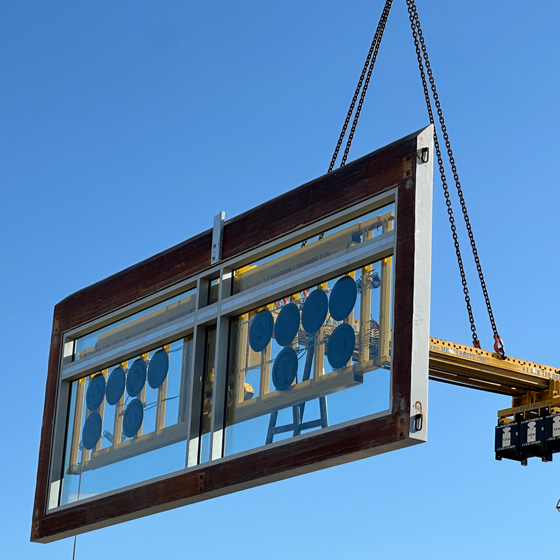
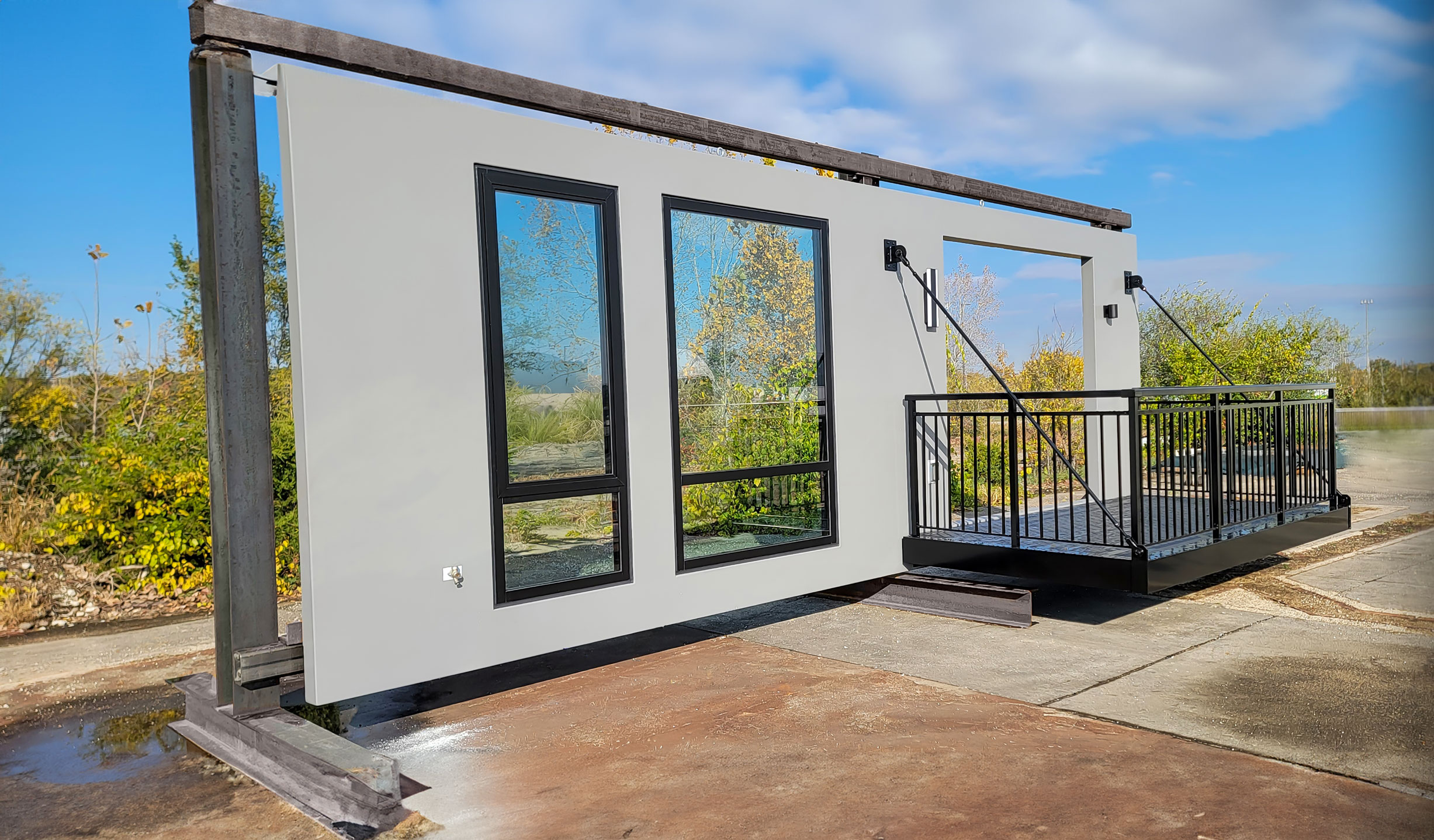
A more practical approach, utilized by our HyperWall™ system, is panelized prefabrication, which overcomes many of the design limitations of volumetric systems while delivering cost advantages. You can still incorporate components and features, such as glazing, to reduce the number of trades and workers you need on-site.
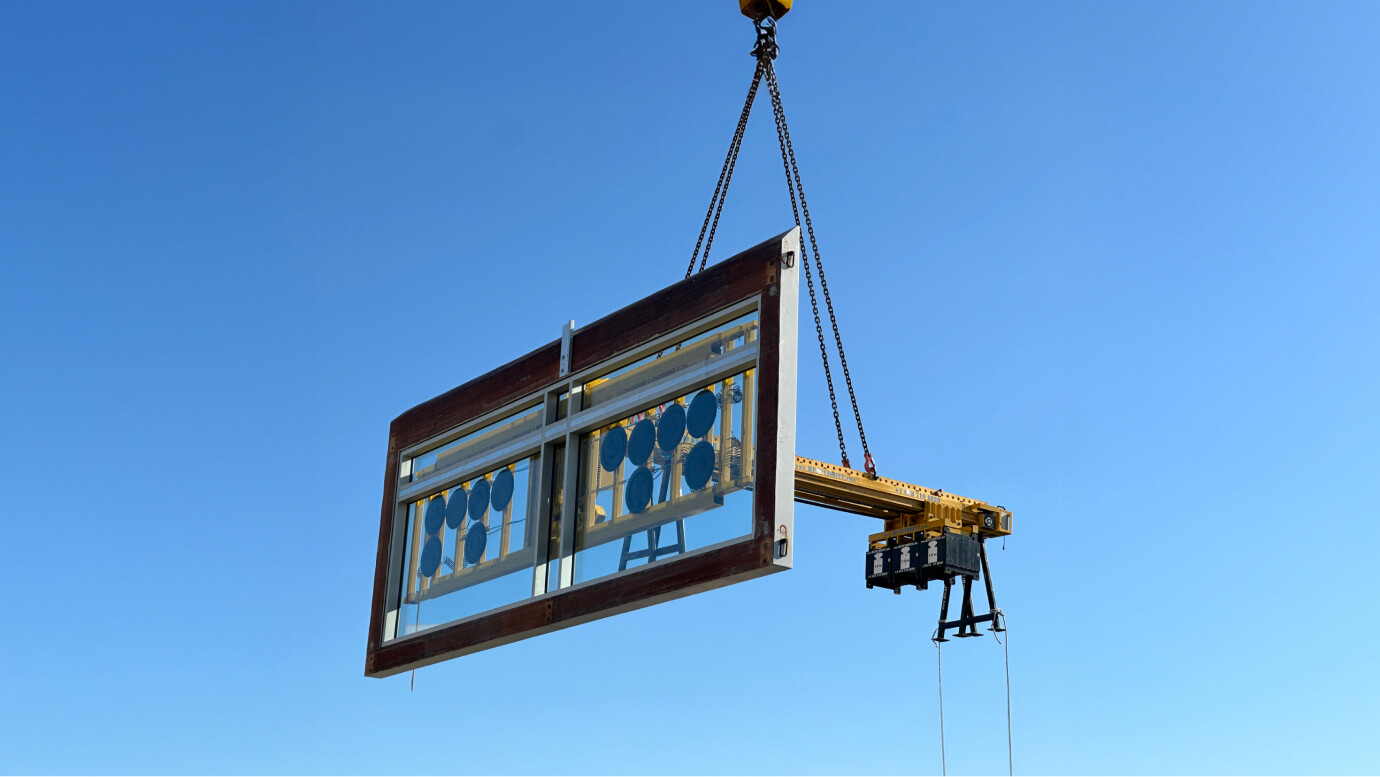
Panels typically offer more architectural flexibility than volumetric units, while allowing architects to specify “plug-and-play” systems instead of designing everything from scratch. Prefabricated panels can also be packed onto trucks more efficiently than large volumetric units, so it takes fewer vehicles to get everything to a job site. You get nearly all the same advantages offered by volumetric units without over-engineering the product or facing the waste of bracing. These lighter-weight components can be lifted with less-expensive cranes, creating significant savings compared to volumetric systems.
Prefabricated panels also support recent changes to the ways architects design facades. The all-glazed exteriors that have been a trend for the last 30 years or so are falling out of favor with owners and developers because of their high energy costs for heating and cooling. A more traditional wall-to-window aspect ratio is emerging to help overcome these costs. Panels with integrated windows offer a more efficient way to make this possible while preserving some of the all-glazed look.
HyperWall Offers a Winning Combination
HyperWall panels combine the benefits of prefabrication and structural composites, creating a winning combination that addresses the most critical challenges facing building construction today.
This approach offers bonuses to architects, owners and general contractors alike. It’s a powerful tool that makes their jobs easier with less detailing and specification, while saving costs, improving safety, reducing embedded and operational carbon, and expanding creative possibilities.

ABOUT THE AUTHOR
Anya Karpov, PE
Director of Engineering at Building Composites | Prefab Unitized Wall Systems