Mission Critical

When you’re building a data center or other mission-critical facility, every day matters. Tight schedules, labor constraints and complex coordination leave little room for delays.
The HyperWall™ building enclosure system helps you close buildings faster through a highly engineered, prefabricated approach that reduces field labor, simplifies installation and enables better schedule stacking.
Hyperwall At a Glance
HyperWall panels made for mission critical projects such as data centers offer numerous benefits over alternative materials and formats.
- Advantages compared to precast concrete
- ~15% the weight — a typical data center wall weight is 11-16 psf, compared with 80-100 psf for precast
- Can be installed in 50% less time
- 7-9 as many panels can be transported per truck
- At least 50% less embodied carbon in the panel system
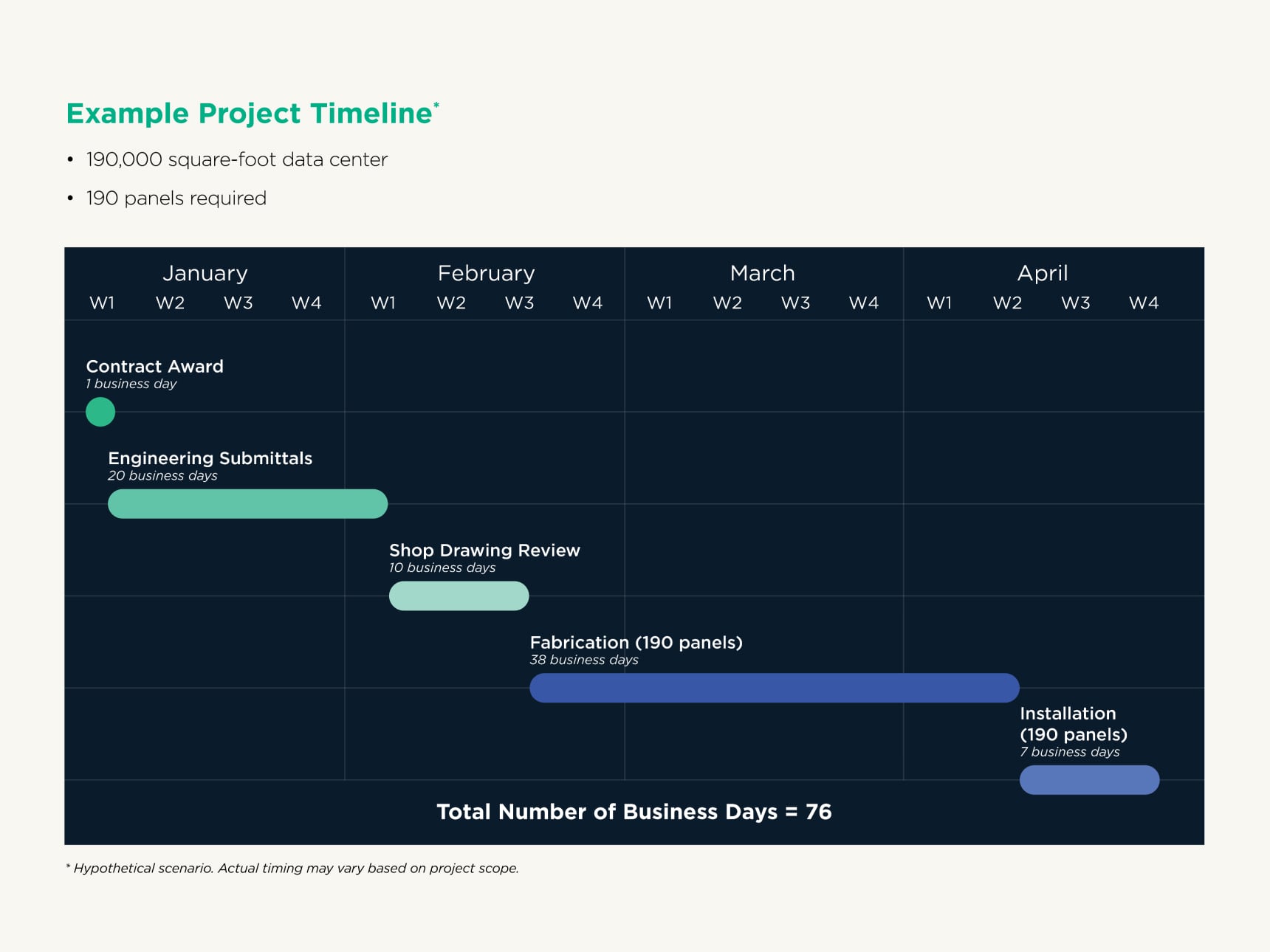
- Typical install rate of approximately 20 panels/day/crane
- A typical crew can install 200+ panels per week with 2 lightweight cranes.
- Superior thermal insulation: R-values of at least 2.8 ft²·°F·h/BTU per inch
- Built-in vapor and moisture barriers
- Standard panel sizes up to 12 x 41 feet
- Factory-installed glazing available
- Complete exterior solution significantly reduces on-site trades
Why Mission-Critical Projects Need a Different Approach
Mission-critical construction operates under unique pressures:
- Aggressive delivery schedules
- Large building footprints
- Multiple trades working simultaneously
- Limited labor availability
- High costs associated with delays
Traditional enclosure approaches often add complexity to already demanding projects. More installation steps, more site activity and more coordination requirements can create unnecessary schedule risk. You need an enclosure strategy that supports speed, efficiency and execution in the field.

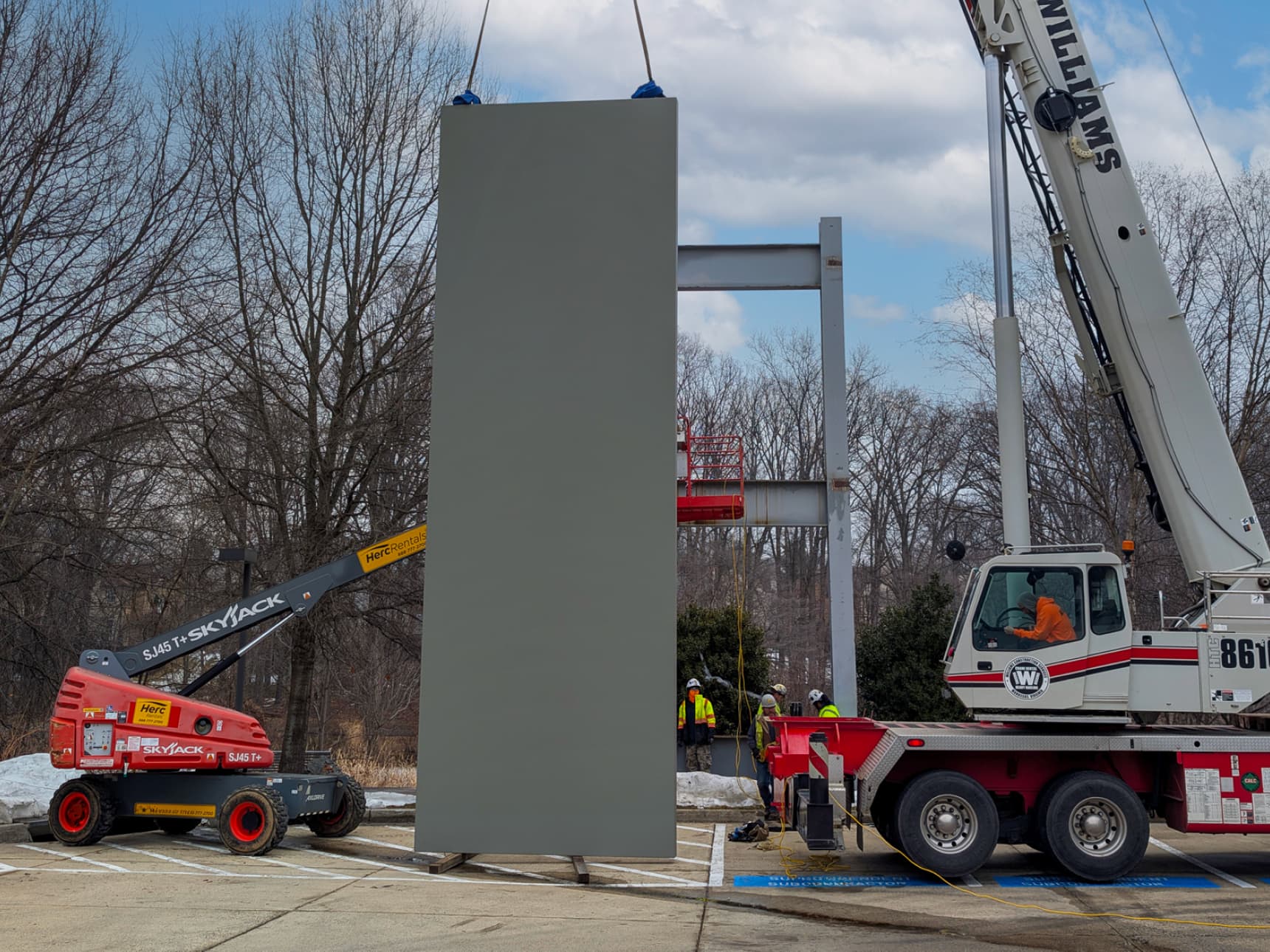
Close Mission-Critical Buildings as Much as 50% Faster and With Less Risk
The HyperWall system offers complete structural and architectural replacement for any exterior building skin system. It’s designed to help complex job sites achieve faster enclosure with lighter equipment, fewer deliveries, less welding and better trade coordination.
In addition, the HyperWall system combines all four critical control layers — thermal, water, air and vapor — into a lightweight, monolithic panel that accelerates installation, lowers overall costs and reduces risks.
The HyperWall System Versus Precast and IMP
Build for Sustainability and Long-Term Value
Its lighter weight means more panels can be transported per truck, reducing the number of deliveries and associated transportation emissions. Structural composites are inherently resistant to UV radiation, chemicals, vapor, moisture and high temperatures. This durability helps support long-term enclosure performance.
Support From Concept to Installation
Its lighter weight means more panels can be transported per truck, reducing the number of deliveries and associated transportation emissions. Structural composites are inherently resistant to UV radiation, chemicals, vapor, moisture and high temperatures. This durability helps support long-term enclosure performance.
To reduce costs and leverage regional labor availability, installation is typically subcontracted using a local workforce, either managed by Building Composites or hired by the general contractor.